The Mystery Beside the Door
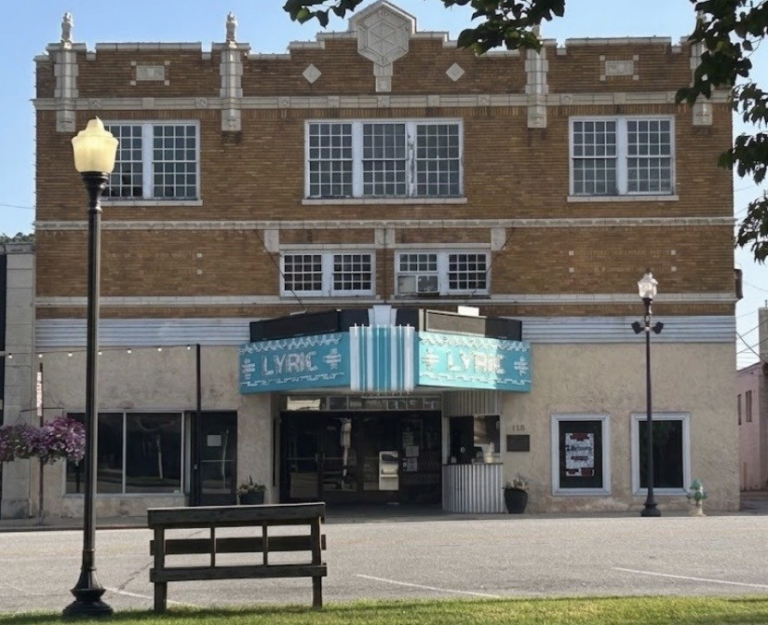
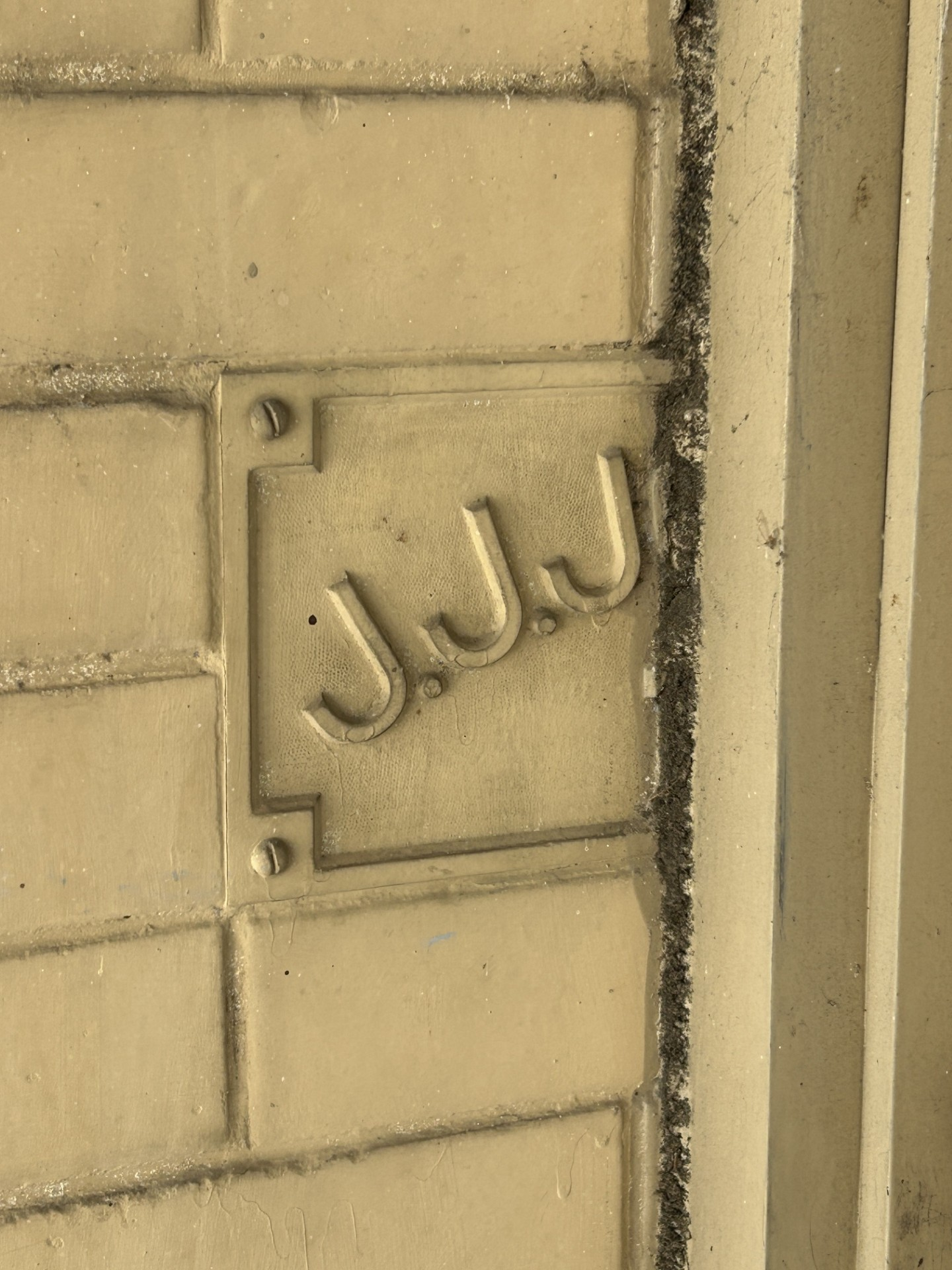
I’d walked past the entrance at 117 N. Main Street numerous times without ever noticing the plaque beside the door.
Then one day, I did.
The cast-metal plaque is mounted beside the recessed entrance, partially hidden beneath a newer door frame. Only a few letters remain visible. They appeared to read J.J.J., perhaps followed by part of an O. It wasn’t much to go on, but it was enough to make me wonder what the rest of the plaque had once said and why someone had placed it there.
Surely somebody in Harrison would know.
I began showing the photograph to people who’d lived here for decades. At the Harrison 150th Anniversary Gala, Troy Massey from the Boone County Heritage Museum walked around with me while we showed it to some of Harrison’s oldest residents. I asked people who’d spent nearly their entire lives here. A 92-year-old gentleman didn’t recognize it. Neither did an 86-year-old lifelong resident. Most people admitted they’d never even noticed the plaque before.
It had been sitting there in plain sight for decades, possibly for more than a century, and its story had quietly slipped away.
When I showed Dr. Joe Bennett a photograph of the plaque partially hidden beneath the door frame at 117 N. Main Street, he studied it carefully. He couldn’t say with certainty what the missing letters once spelled, but something about it stirred a distant memory.
“It doesn’t sound to me as if you’re wrong,” he said. “J.J. Johnson sounds familiar to me.”
It wasn’t proof that the building had once been known as the Johnson Building. But coming from someone who grew up on the square, remembered the basement pool hall known as the Rat Hole, and recognized the stairway leading down to it, it was one more clue pointing in the same direction.
The first real lead came from Tina Farmer, a genealogist at the Boone County Library. She found information about Dr. John Jeremiah Johnson, a physician born in 1876, and shared research that revealed much more about his life. Dr. Johnson wasn’t just a doctor. He owned extensive acreage, including apple orchards, and some of his property later became known as Johnson Park, where North Arkansas Regional Medical Center was eventually built. The land records also showed that he was a prolific buyer of property throughout Boone County.
For the first time, the letters on the plaque seemed connected to a real person. Still, there was nothing tying Dr. Johnson directly to 117 N. Main Street.
Then I found the only reference I’d seen anywhere to a Johnson Building on the east side of the square. It appeared in a comment in the Harrison Goldie Oldie Memories Facebook group. The commenter asked where the Johnson Building on the east side of the square was and mentioned two men who remembered it. I later asked the group whether anyone knew which building the comment referred to, but no one seemed to know.
The name existed in someone’s memory, but the building itself had lost its identity.
By then, the question had become very specific.
Had Dr. J.J. Johnson ever owned the land at 117 N. Main Street?
That answer was waiting in the Boone County Land Office.
Searching deed books from the early 1900s is an experience all its own. Every page was written by hand, and some of that handwriting was terrible. I worked through the grantor and grantee indexes, located book and page numbers, wrestled enormous deed books down from the shelves, and tried to decipher names and legal descriptions written more than a century ago.
Most of the entries led somewhere else.
Then one of them didn’t.
There, in a handwritten warranty deed dated October 18, 1912, was the name I’d been hoping to find:
Dr. J.J. Johnson.
The deed described the south half of Lot 4 and six feet from the north side of Lot 6 in Block 2 of the original town of Harrison. It also conveyed an interest in the adjoining stone wall. I compared that description with the current parcel information for 117 N. Main Street.
It matched.
I read it again.
Then I checked it again because after all the questions, conversations, and dead ends, I almost couldn’t believe the answer was sitting there in an old deed book.
Dr. J.J. Johnson had purchased the land in October 1912. According to the building records, the structure standing there today was built in 1913. The deed gave him an interest in the adjoining stone wall, exactly the kind of right he would’ve needed to construct a commercial building against the one already standing beside it.
All at once, the pieces fit.
Dr. Bennett’s distant memory. Tina Farmer’s research. The reference to a Johnson Building on the east side of the square. The handwritten deed. The 1913 construction date. None of those pieces told the whole story by themselves. Together, they painted a picture that hadn’t been seen in more than a hundred years.
There may still be more to discover. I’d love to find a newspaper announcement about the building’s construction, an early photograph, or a business directory that identifies it by name. But the central mystery now seems to have an answer.
Dr. J.J. Johnson bought the land in October 1912, and everything we know today points to him constructing the building the following year. The nearly hidden plaque beside the entrance may have been quietly preserving his name for more than a century.
The next time you walk through downtown Harrison, take a closer look around. Stories are still hiding in plain sight, tucked beneath door frames, carved into stone, and preserved in details most of us pass without noticing. Sometimes they’ve been waiting more than a hundred years to be noticed again.
Special thanks to Tina Farmer at the Boone County Library for helping uncover the story of Dr. John Jeremiah Johnson and sharing the research that gave this search its first real direction.
Special thanks to Marla and Tristan in the Boone County Land Office for so generously sharing their knowledge. They taught me how to use the indexes, helped me track down the right deed books, laughed with me when the wrong books came down, and answered every question I had. The books were heavy, but their kindness made the search a whole lot lighter.