Hidden in Plain Sight: The Story of C. L. Glines and a Forgotten Downtown Sign
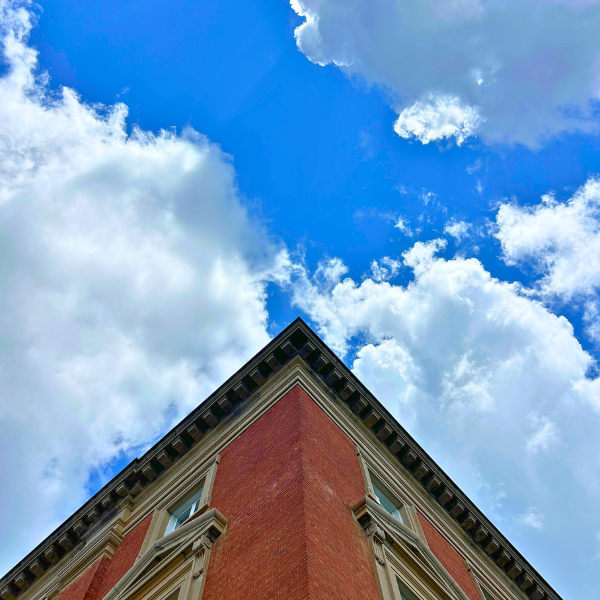
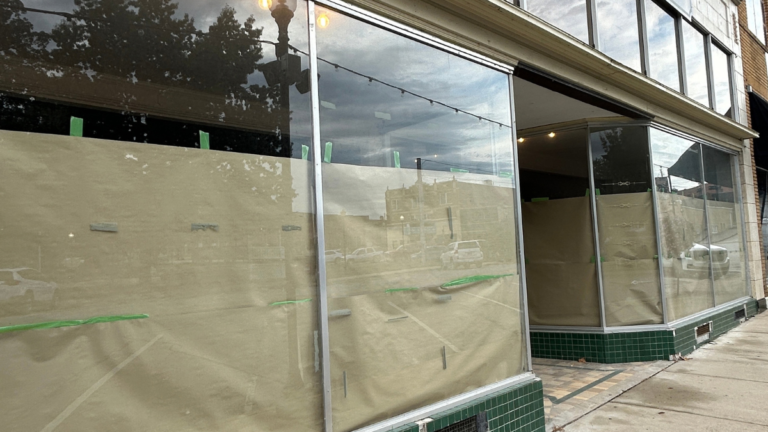
Built in 1895, the building at 116 W. Stephenson Avenue has witnessed more than 130 years of downtown Harrison history. Once home to a bank, complete with a vault, the property would later become connected to one of Harrison’s longtime jewelers, C. L. Glines.
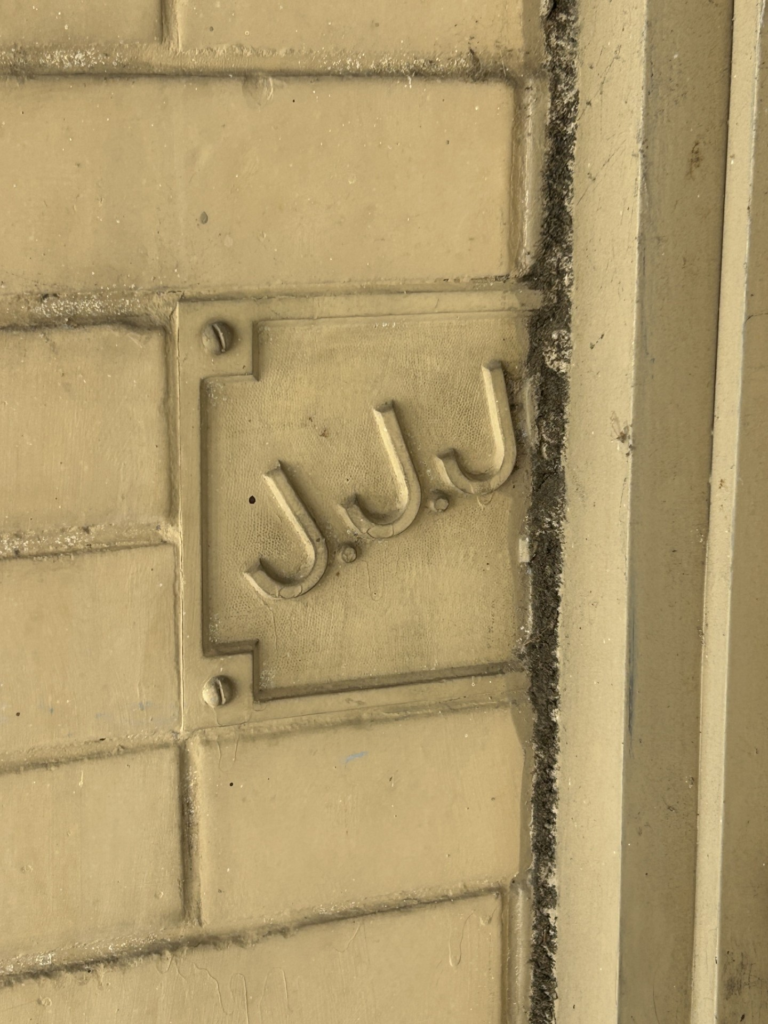
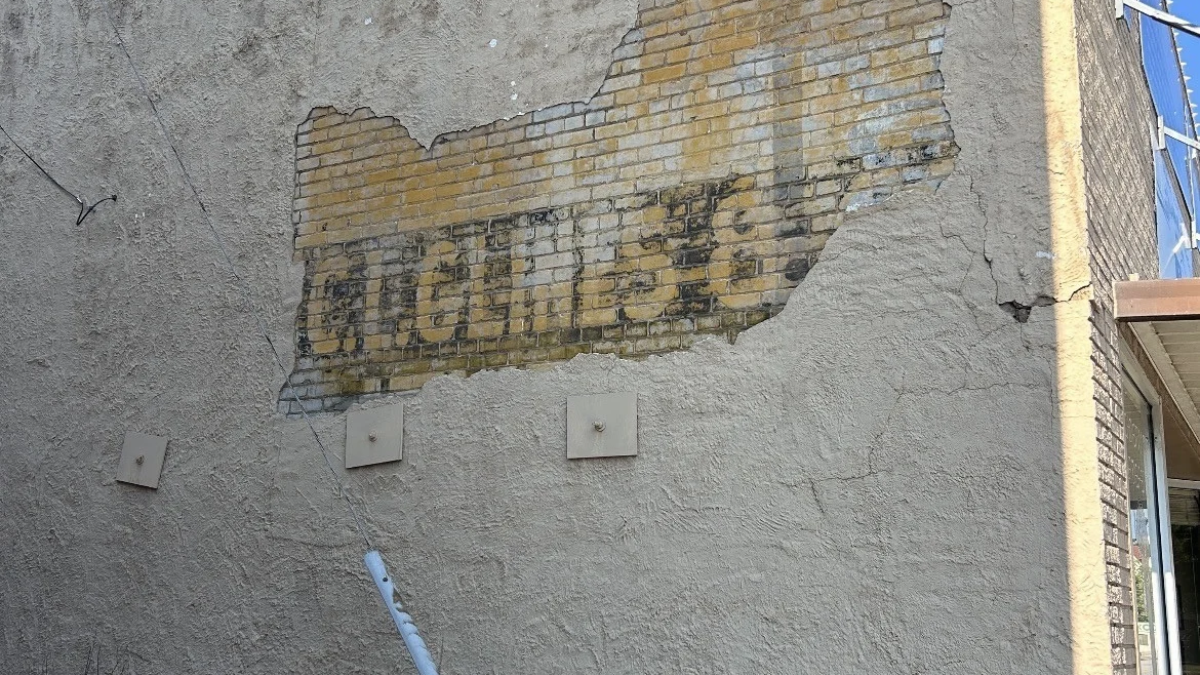
Today, a faded advertisement emerging from beneath layers of stucco offers another glimpse into its past.
The sign, painted directly onto brick, had been hidden for decades. As portions of the building’s exterior covering have fallen away, fragments of dark lettering against a yellow background have reappeared. The discovery offers a fascinating connection to one of the merchants that once traded on the Square.
A Jeweler on the Square
By 1885, C. L. Glines was operating a jewelry business on the west side of Harrison’s courthouse square.
In those days, a jeweler offered much more than an occasional special purchase. Watches were essential for keeping time, and jewelers often provided the repairs and maintenance needed to keep those valuable possessions running.
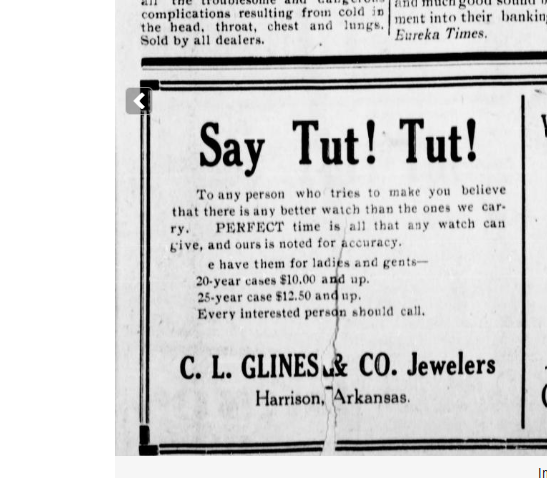
Glines remained in business for decades, and his advertisements offer a glimpse into shopping in early Harrison.
A January 14, 1911, newspaper advertisement for C. L. Glines & Co., Jewelers, featured the memorable headline “Say Tut! Tut!” and promoted watches for ladies and gentlemen. Twenty-year watch cases were advertised for $10 and up, while 25-year cases started at $12.50.
But somewhere along the way, Glines’s business changed locations.
From Bank Vault to Jewelry Store
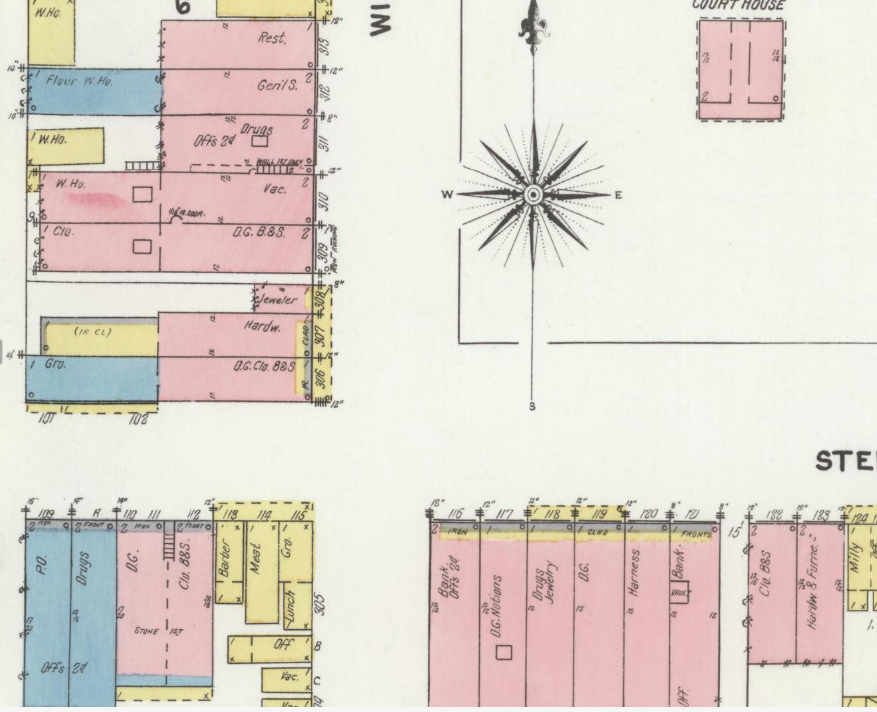
Historic Sanborn Fire Insurance Maps provide a fascinating record of downtown Harrison’s early buildings and businesses. Although downtown Harrison’s street addresses have changed over the years, the building’s location and historic property records help establish its connection to today’s 116 W. Stephenson Avenue.
The 1904 map shows a jewelry business on the west side of the Square, consistent with Glines’s earlier location. The same map reveals something particularly interesting about the property now known as 116 W. Stephenson Avenue.
It was a bank, complete with a vault.
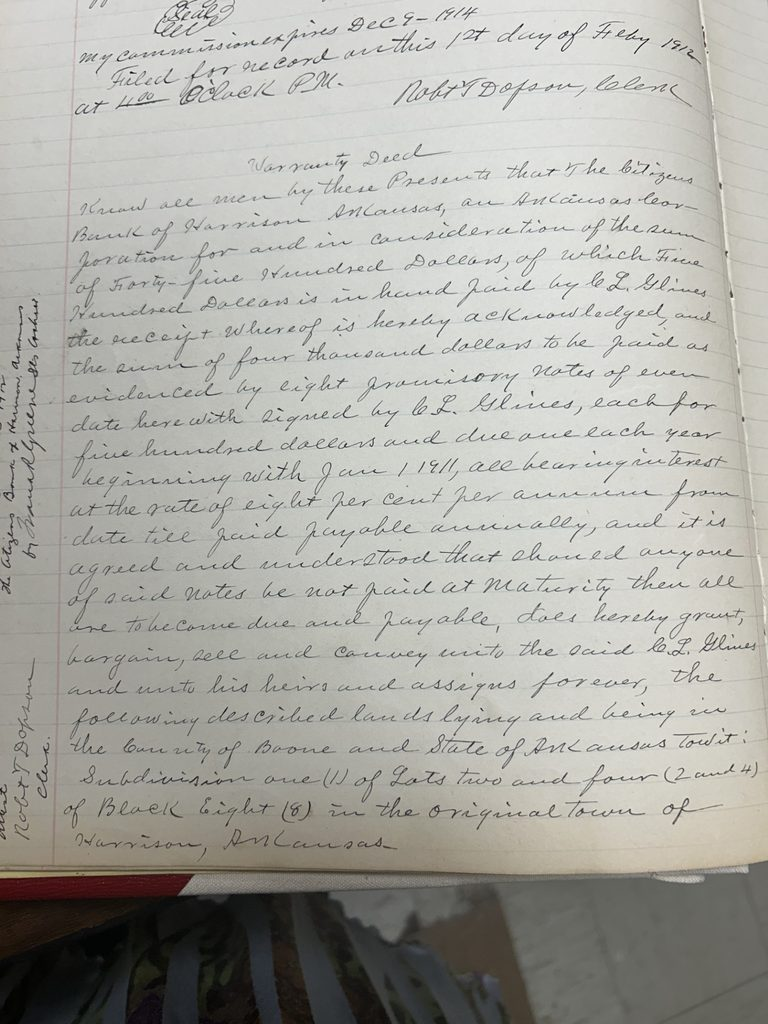
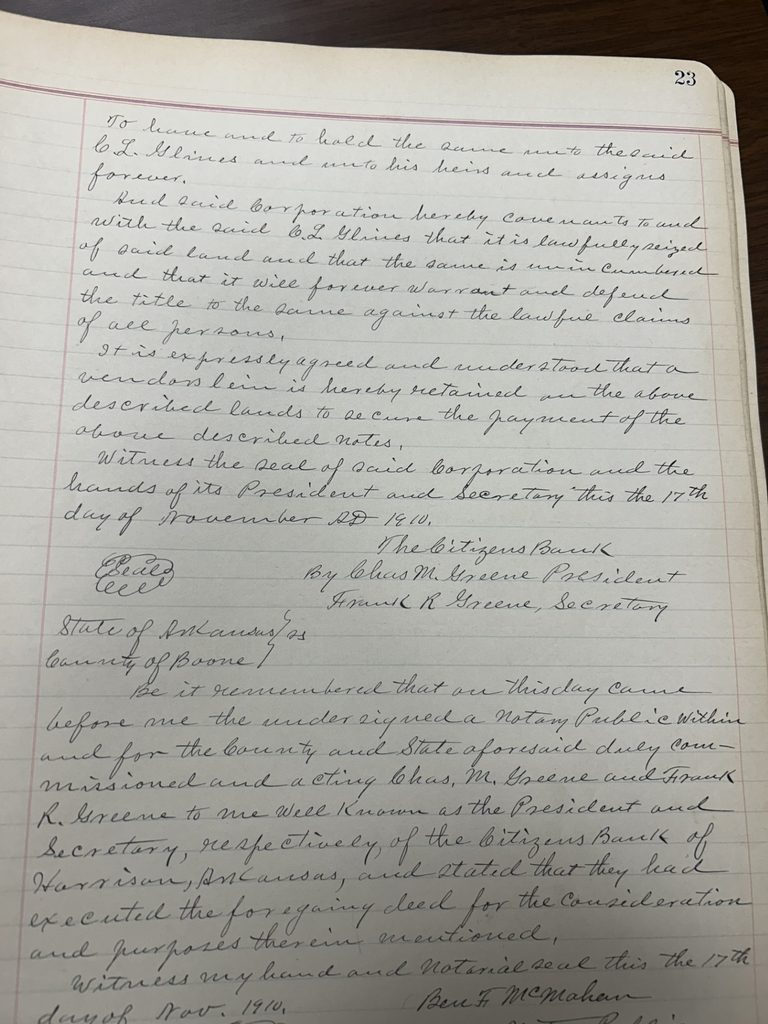
Six years later, on November 17, 1910, C. L. Glines purchased property at that location from The Citizens Bank of Harrison for $4,500.
The handwritten deed, preserved in Boone County’s historic property records, documents the transaction and provides a direct connection between Glines and the property.
By 1914, the Sanborn maps show that the jewelry business previously identified on the west side of the Square was gone, while a jeweler appeared on the south side.
Although the maps don’t tell us exactly when Glines moved, the property purchase offers an important clue.
And it raises an intriguing question. Did the old bank vault eventually find a second purpose, protecting watches, jewelry, and other valuables?
It’s an interesting possibility, although the vault’s later use remains unknown.
A Sign from Another Time
The faded lettering now visible at 116 W. Stephenson is another reminder of how much downtown Harrison has changed over the generations.
Before illuminated storefront signs and modern advertising, businesses frequently painted advertisements directly onto brick walls. These advertisements, now commonly called ghost signs, sometimes remained visible for decades before being covered by renovations or new building materials.
More than a century after C. L. Glines purchased the property, a piece of the building’s past is emerging once again. What was hidden beneath the stucco has become a visible connection to the days when Glines and his fellow merchants were helping shape downtown Harrison.
A Story Still Unfolding
C. L. Glines was one of the many merchants whose businesses helped shape downtown Harrison. His advertisements appeared in local newspapers, his name became part of the Square’s commercial history, and his 1910 property purchase remains documented more than a century later.
The building at 116 W. Stephenson has stood through changing businesses, changing streetscapes, and more than 130 years of Harrison history.
And now, a small section of exposed brick has brought part of that history back into view.
For now, the faded lettering at 116 W. Stephenson serves as a reminder that downtown Harrison’s buildings are more than places of business. They are connections to the people, investments, and everyday lives that shaped our community.
Some stories are written in books. Others are written on the walls.
Deed source: Boone County, Arkansas, historic deed records.